The "Extended Classroom" – A Model for Effective Home Support
As educators, we know the reality: the six hours a student spends with us in school is just the introduction. The real consolidation of knowledge, the "cementing" of concepts, happens during independent practice at home.
However, a common frustration we face in the Indian education system is the disconnect between how we teach and how students practice at home. Often, homework becomes a chore of mindless copying, or parents feel ill-equipped to help with modern syllabi.
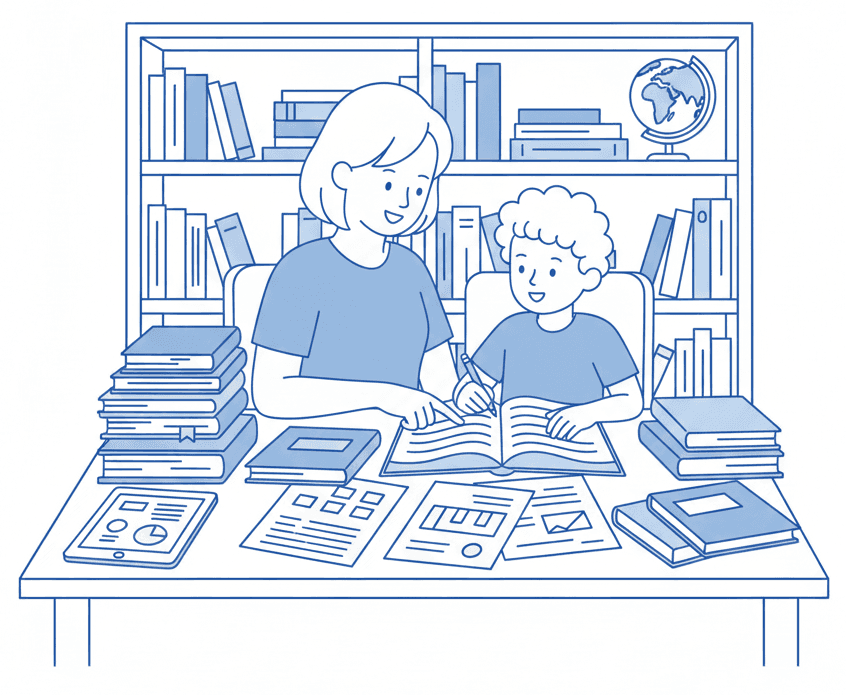
The image above illustrates the Gold Standard of academic mentorship. It captures the essence of Scaffolding—a pedagogical technique where the adult provides structured support that is gradually removed as the student becomes independent.
1. The "Guide on the Side" Model
Observe the body language in the image. The adult is not holding the pen; the student is. The adult is pointing to the text, likely highlighting a specific step or keyword.
In our parent-teacher meetings, we often hear, "I sit with him, but he still doesn't understand." We need to educate guardians on the difference between doing the work and guiding the work.
- The Pedagogical Shift: The adult in the image is practicing differentiation. She is breaking down a complex text (likely a heavy NCERT chapter) into manageable chunks.
- Teacher Tip: Advise parents to use the "I Do, We Do, You Do" method. The image represents the "We Do" phase, shared engagement before the child attempts the "You Do" (independent practice).
2. The "Prepared Environment" (Reducing Cognitive Load)
- Resource Access: Vertical storage (bookshelf) and horizontal spread (charts/tables) allow for cross-referencing. In subjects like Social Studies or Science, students often fail because they don't know where to look for answers.
- Visual Aids: The charts on the desk suggest that learning isn't just textual. As teachers, we should encourage students to create these "cheat sheets" or mind maps at home to summarize our lectures.
3. Blended Learning Integration
The presence of the tablet alongside the textbook is a perfect example of Blended Learning.
- Supplemental, Not Distraction: The device is flat on the desk, a tool alongside the book. It suggests the student might be watching a concept video (perhaps a Khan Academy or Diksha app video) to reinforce the classroom lesson.
- Digital Literacy: We must teach our students that screens are not just for entertainment. They are archives of information.
Actionable Advice for Your Students
- The "Arm's Reach" Rule: Can you reach your textbook, notebook, and geometry box without standing up?
- Visual Anchors: Do you have a summary sheet or formula chart visible on your desk?
- The Mentor Check: Do you have someone (parent/sibling) you can explain the concept to?
"The objective of education is to prepare the young to educate themselves throughout their lives."
Robert Maynard Hutchins
Final Note to Educators
Our job doesn't end at the classroom door. By analyzing and promoting positive study habits like the ones shown here—organized, supported, and resource-rich—we empower our students to succeed even when we aren't watching. Let's build that partnership with the "home team."
Highlights & Notes
Select any sentence in the article and save it to your library with a private note.
Local highlights are available now. Sign in to sync your highlights across devices.
No highlights yet for this article.
Topics
Was this helpful?
Your feedback shapes what we publish next.
Ask This Article
Need help on this topic?
Human-moderated support from the editorial team.